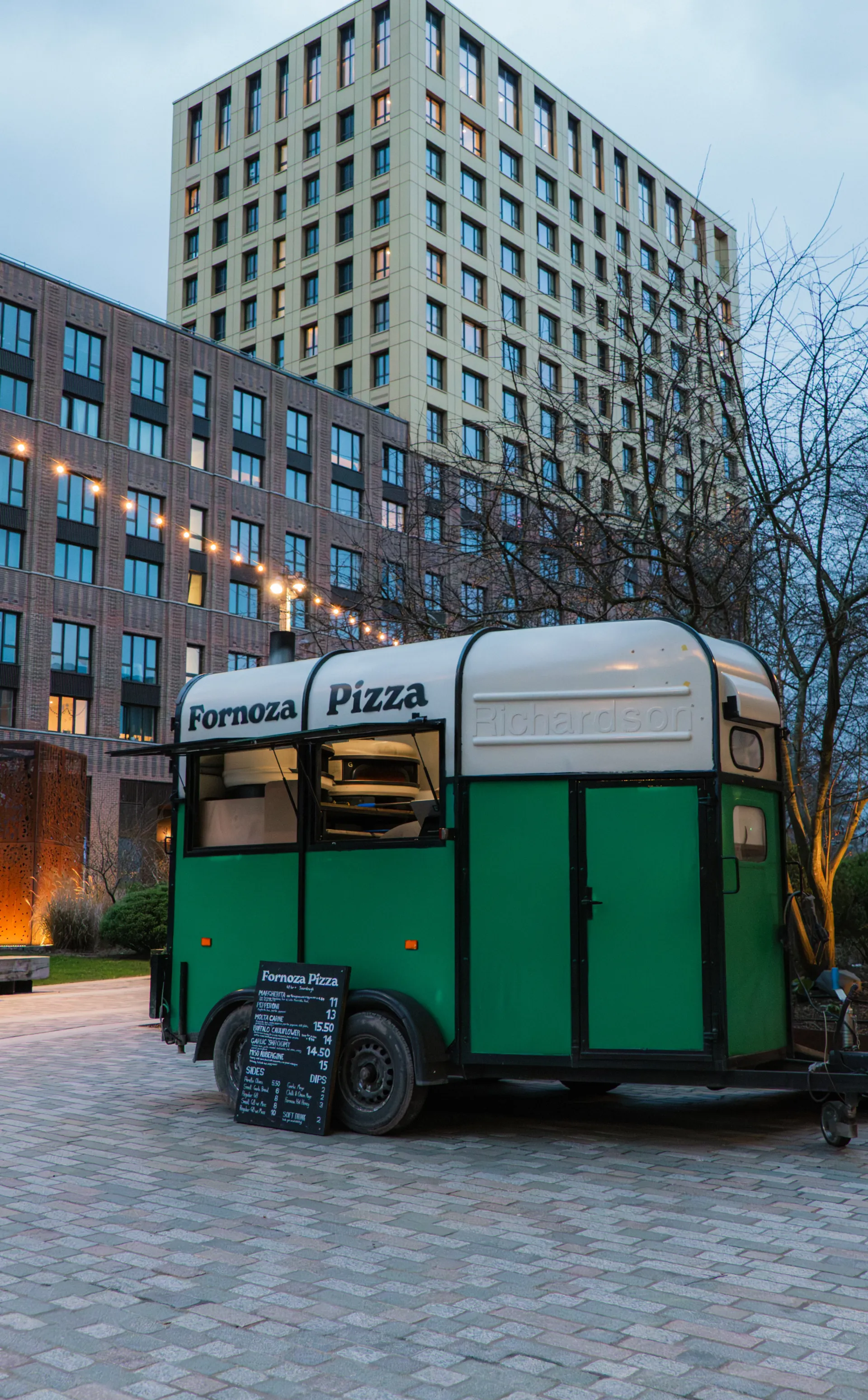
Converting a Horsebox
Why a horsebox?
We wanted a kitchen that could travel without compromising on kit. A horsebox gives a strong chassis, a weatherproof shell, and enough internal volume for ovens, prep and storage, without the footprint of a full food truck. For couples planning barn weddings, corporate sites with tight access, or festivals where space is premium, that matters.
It also tells a story before we serve the first pizza. Guests see the box roll in, doors open, and the oven come up to temperature, it sets the tone for something handmade, not mass-produced.
The build in practice
Finding the right base vehicle took time: rust, weight limits, and door layout all feed into what you can legally tow and insure. Once we had a shell, everything was planned around the oven, power, ventilation, gas or electric runs, and a workflow so dough to plate stays short and safe.
We insulated, lined, and fitted extraction so we can work comfortably across seasons. Every cable and pipe is labelled; every surface chosen so it can be cleaned fast between services. That is not glamorous copy, it is what lets us hit 100+ pizzas an hour when the queue is real.
What we learned
You learn quickly what “level ground” really means, how wind affects a gazebo, and why a spare regulator is worth its weight. We have checklists for setup and pack-down because muscle memory beats improvisation when you are on someone else’s clock.
The horsebox is not a gimmick, it is the reason we can say yes to fields, farmyards, and car parks where a bricks-and-mortar kitchen never could. If you are comparing mobile catering options, ask about power, footprint, and recovery plans for bad weather; we are always happy to talk it through.